
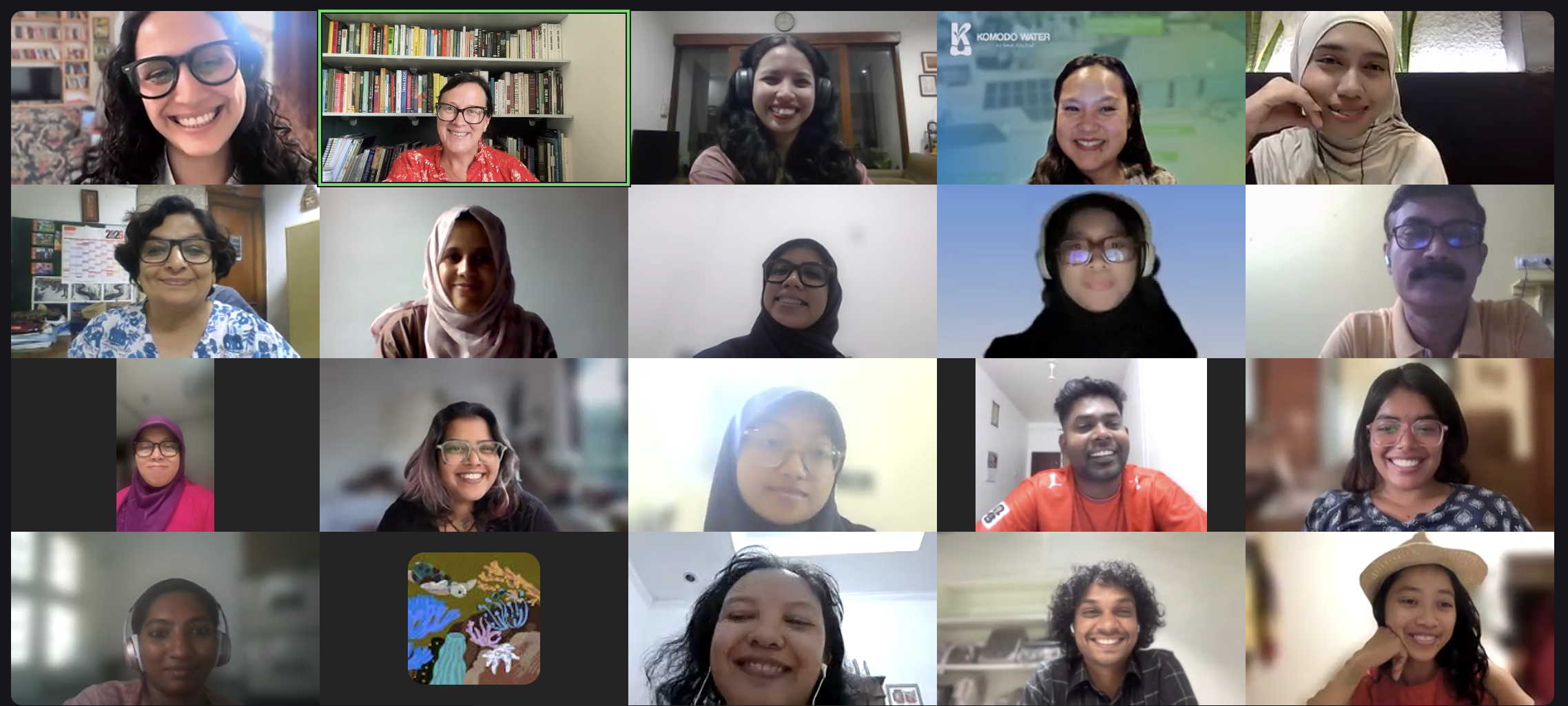
Last month we welcomed an incredible community of practitioners, storytellers, organisers, researchers, and entrepreneurs working at the intersections of climate and gender across India and Indonesia.
Together, they bring diverse experiences from forests, livelihoods, water access, public health, mental health, caste equity, and trans and queer rights.
What connects them is a shared commitment to approaching the climate crisis through an intersectional lens. One that recognises that justice, care, and equity are inseparable from climate action.
This is also a programme that explores care as a transformative leadership practice for climate transitions. Last week we reflected together on what it means to lead in ways that challenge systems built on extraction, hierarchy, and exclusion.
We began by grounding ourselves in a shared understanding that care-based leadership is a transformative practice. It challenges systems built on domination and oppression, systems that have historically marginalised women, Indigenous communities, other marginalised social identities, and the natural world. These are the same systems that have contributed to the climate crisis. Transforming them requires a different kind of leadership: one that is community-driven, rooted in care, grounded in justice, and driven by purpose.
What care-based leadership means
Across the groups, participants described care-based leadership as leadership that listens deeply, builds trust, shares power, values local knowledge, and leads with empathy, dignity, and compassion. It is rooted in justice and equity, recognizes the strengths and agency of communities, creates safe and inclusive spaces, and fosters collaboration over competition. Rather than seeing communities as passive recipients, participants emphasised that care-based leadership recognises people as active leaders and partners in creating change.
Where these values come from
Participants consistently reflected that their understanding of care has been shaped by lived experience. Experiences of organising with communities, feminist movements, navigating discrimination, conflict, environmental work, family values, and witnessing injustice all informed their leadership practice. Many shared that these values emerge from personal experiences, community relationships, and a desire to create systems that they themselves may not have experienced.
Challenges to practising care-based leadership
Participants acknowledged that practising care-based leadership within existing systems is not easy. Common challenges included patriarchal norms, gender hierarchies, bureaucratic and hierarchical organisational structures, funding pressures, limited resources, and systems that prioritise efficiency over relationships. Many reflected on the emotional toll of burnout, the guilt of not always being able to lead with care, and the difficulty of building trust in environments shaped by conflict, extraction, and unequal power. There was also a shared recognition that leadership rooted in care is often dismissed as “soft” or “feminine,” despite its importance in creating meaningful change.
Where care-based leadership is already thriving
While examples were sometimes difficult to identify, participants also shared many moments where care-based leadership is already alive. They highlighted women supporting one another during crises, youth collectives built on trust, self-help groups, solidarity networks, community-led organising, farmers’ movements, Indigenous resistance, and local movements grounded in shared purpose and mutual care. These examples demonstrate that care flourishes where people invest in relationships, trust local knowledge, share leadership, and centre community wellbeing over individual recognition.
Small steps to practice care-based leadership
Participants concluded by identifying practical commitments to strengthen care in their own leadership practice. These included:
- Regularly checking in with colleagues and communities beyond work tasks.
- Listening before leading and making space for different voices, especially women and community members.
- Sharing leadership, responsibilities, and knowledge more intentionally.
- Appreciating and recognising community members more often.
- Showing up for people before they ask for support.
- Being honest and avoiding false promises.
- Prioritising self-care alongside caring for others.
- Leading with empathy, trust, and collaboration in everyday interactions.
Together, these small but intentional actions reflect the belief that transforming larger systems begins with how we choose to lead every day. Care-based leadership is not only a set of values, it is a daily practice of building relationships, redistributing power, and creating the conditions for communities and people to thrive.
Transforming systems begins with transforming how we lead. Care is the foundation for building just, equitable, and lasting climate transitions.